
Significance of Clarifiers & Their Working in Wastewater Treatment Plants
Posted by David Cannon on 2nd Apr 2026
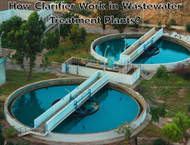
Wastewater treatment in industrial and municipal systems is becoming increasingly complex. Incoming streams often carry high levels of suspended solids, variable chemical loads, and industrial effluents. Excess solids can clog equipment, compromise effluent quality, and make sludge handling difficult, while at the same time uneven flow and turbulence reduce process efficiency. Strict regulations add further pressure, making compliance critical. To address these challenges, wastewater treatment plants rely on clarification, which is an essential separation process that removes suspended solids through gravity settling.
This clarification is performed using a clarifier, which is a tank where solids settle by gravity, allowing clarified water or fluid to flow out. Advanced clarifier systems often include scrapers or rakes to remove sludge and overflow weirs to ensure smooth discharge. Some systems also integrate chemical dosing to enhance settling efficiency. Implementing primary and secondary clarifiers within a treatment system improves efficiency, reduces operational costs, and helps facilities maintain regulatory compliance. This post explains the role of clarifier tank, their types, applications, key selection factors, and current innovations in wastewater treatment systems.
Types of Clarifiers and Their Applications
Clarifiers are available in several configurations, each suited for specific applications. By selecting the right type, operators can handle varying solids loads efficiently, maintain water quality, and reduce downtime during maintenance.
- Primary clarifiers: A primary clarifier in wastewater treatment removes large and settleable solids from raw wastewater. These are common in municipal plants and in industries where heavy particulate matter enters the system, such as food processing or chemical manufacturing facilities.
- Secondary clarifiers: These clarifiers handle biological flocs after processes such as activated sludge. They polish the effluent, ensuring that microbes do not carry over into discharge streams.
- High-rate or lamella clarifiers: These clarifiers offer compact solutions for facilities with limited space. Their inclined plates increase settling surface area without requiring larger tanks, which is useful in industrial sites with space constraints or retrofits.
- Specialized industrial clarifiers: Certain industries such as chemical plants, pharmaceutical facilities, and heavy manufacturing require customized industrial water clarifiers. These are used where wastewater contains high total suspended solids (TSS). These clarifiers are made from corrosion-resistant materials and may include automation for sludge removal and chemical dosing.
Working & Components of Wastewater Clarifiers: Traditional vs. Modern Systems
At their core, clarifiers separate solids from water using gravity-driven sedimentation. Wastewater enters the tank, solids settle to the bottom as sludge, and clarified water flows out through overflow weirs. Traditional systems rely on this basic sequence consisting of influent entry, settling, sludge removal, and effluent discharge to maintain consistent water quality.
Modern industrial clarifiers build on this foundation with enhanced features for improved performance. In advanced clarifiers:
- Lamella plates increase settling surface area, allowing more solids to settle in a smaller footprint.
- Automated scrapers and rakes remove sludge efficiently.
- Advanced inlet distribution systems minimize turbulence and promote uniform flow.
- Many systems include chemical dosing points for coagulation and flocculation, accelerating solids removal.
- Optimized basin geometry, improved overflow weirs, and integration with real-time monitoring and predictive maintenance systems enhance operational control.
These innovations allow facilities to handle fluctuating loads, improve operational reliability, reduce downtime, and optimize chemical and energy use.
For industrial operators, choosing clarifiers with these advanced designs ensures consistent performance, compliance with stringent regulations, and efficient handling of high-volume or chemically complex wastewater streams. Modular designs and smart monitoring further enhance throughput while simplifying maintenance and operational control. A well-designed clarifier tank in water treatment systems ensures efficient solids separation while simplifying maintenance and operational management.
How Clarifiers Support Biological Treatment Processes
Clarifiers play a crucial role in biological treatment systems, particularly in activated sludge processes, by facilitating the separation of solids and maintaining a stable microbial environment for effective treatment.
- Secondary clarifiers separate biomass from treated water: During biological treatment, microorganisms break down organic contaminants and form biological flocs. After biological treatment in the aeration tank, secondary clarifiers remove the suspended biomass (microorganisms) that have broken down contaminants, ensuring that only clear, treated water moves to the next stage.
- A portion of settled sludge is returned as Return Activated Sludge (RAS): This sludge is rich in active microorganisms and returning it to the aeration tank helps maintain the microbial population necessary for efficient biological treatment.
- Excess sludge is removed as Waste Activated Sludge (WAS): The excess biomass that builds up over time is removed from the system as WAS and sent for further treatment or disposal. This keeps the system from becoming overloaded with excess microorganisms.
When the clarifier performs poorly, biomass washout can occur, which means microorganisms are lost from the system, weakening the biological treatment process. Therefore, maintaining stable clarifier operation is vital for ensuring efficient microbial activity, consistent biological performance, and high-quality effluent.
Impact of Flocculation on Clarifier Efficiency
Flocculation directly influences settling performance inside clarifiers. After coagulation, gentle mixing allows particles to form larger flocs, which settle more easily. Flocculation effectiveness depends on:
- Mixing intensity: The speed and consistency with which the chemicals and particles are mixed affects the size and strength of the flocs formed. Insufficient mixing can lead to incomplete flocculation, resulting in smaller or weaker flocs.
- Chemical dosage: The correct amount of coagulants and flocculants is essential. Overdosing can create excessive sludge, while underdosing may result in poor floc formation, reducing settling efficiency.
- Contact time before clarification: Adequate time for the particles to interact and form flocs before they enter the clarifier is necessary. Too little contact time can result in incomplete flocculation, while too much time can lead to unnecessary sludge formation.
Key Benefits of Using Clarifiers Include
- Faster settling rates: Larger flocs settle more quickly, reducing the time required in the clarifier for effective separation.
- Lower effluent turbidity: Well-formed flocs capture and remove more suspended particles, leading to clearer effluent and higher-quality treated water.
- Reduced solids carryover: Larger, heavier flocs are less likely to be carried over with the clarified water, improving overall separation efficiency.
- Improved stability under variable load conditions: Flocculation allows the clarifier to handle fluctuations in influent quality and flow rates more effectively, ensuring consistent performance even under changing conditions.
Current Innovations in Clarifiers and Treatment Systems
The market for water and wastewater treatment equipment continues to grow steadily. Industrialization, urbanization, and tighter discharge standards are the main drivers, enabling advances and innovation in clarifiers. Some current trends include:
- Widespread adoption of lamella clarifiers with inclined plates: These units pack a much larger settling surface into a smaller footprint than conventional tanks, boosting solids removal without increasing space requirements. This makes them ideal for industrial sites with limited room or retrofit projects where plant expansion is restricted.
- Improvement in structural and operational features of traditional clarifiers: Modern designs include hopper‑bottom tanks for easier sludge discharge, precision drive units for smoother scraper operation, and self‑flushing scum collectors to cut maintenance time and costs.
- Automation and digital control systems: This is gaining traction. Sensors now provide real‑time data on sedimentation rates and sludge levels, allowing operators to adjust chemical dosing, flow rates, and sludge withdrawal to sustain performance and meet tighter effluent standards.
These innovations help reduce downtime, lower operational costs, and improve efficiency, which matters in industrial contexts where even small improvements in clarity reduce the load on downstream treatment units.
How Chemical Dosing Enhances Clarifier Performance
Chemical dosing is especially beneficial for industrial wastewater containing fine suspended solids, oil emulsions, or variable chemical compositions. However, excessive dosing can lead to increased sludge volume and higher operational costs. So, precise control is crucial to ensure efficient performance. Chemical dosing improves clarifier efficiency when natural settling is insufficient.
- Coagulants: Neutralize the charges on particles, allowing them to clump together for easier removal.
- Flocculants: Promote the formation of larger flocs, speeding up the settling process.
Chemical dosing is especially useful in industrial wastewater containing:
- Fine suspended solids
- Oil emulsions
- Variable chemical composition
Automated dosing systems and real-time monitoring allow operators to adjust chemical addition based on changing wastewater characteristics, improving consistency while optimizing chemical usage.
Common Clarifier Problems and Troubleshooting Solutions
Despite their relatively simple operating principle, clarifiers can experience performance issues that affect treatment efficiency. Understanding common problems helps operators maintain stable operation and avoid downstream complications.
- Sludge Bulking
- Caused by poor biological balance or fine solids
- Leads to poor settling and carryover
- Solution: Adjust upstream biology and optimize chemical dosing
- Short-Circuiting and Turbulence
- Flow bypasses settling zone
- Reduces retention time
- Solution: Inspect inlet design and baffles
- Sludge Blanket Rise
- Excess sludge accumulation reduces capacity
- Solution: Increase sludge withdrawal frequency
- High Effluent Turbidity
- Indicates poor separation efficiency
- Solution: Review hydraulic loading and flocculation
Routine monitoring and preventive maintenance significantly improve clarifier reliability and extend equipment life.
Factors to Consider When Selecting Clarifiers and Optimizing Performance
Choosing the right wastewater clarifier is critical for maintaining treatment efficiency, protecting downstream equipment, and meeting discharge standards. Industrial and municipal systems face varying loads and complex wastewater composition, so several design and operational factors must be evaluated before selecting a wastewater clarifier.
- Hydraulic Loading Capacity
- The clarifier tank must handle both normal and peak flow conditions.
- Incorrect hydraulic loading can disturb the settling zone and reduce separation efficiency.
- Proper inlet design and uniform flow distribution help prevent turbulence and short circuiting.
- Sludge Handling and Removal Mechanism
- Efficient sludge removal prevents buildup that can affect settling performance.
- Scrapers, rakes, and sludge hoppers should be sized for the expected solids load.
- Regular inspection and maintenance are necessary to avoid mechanical failure or uneven sludge accumulation.
- Wastewater Characteristics
- Particle size, density, and chemical composition directly affect settling behavior.
- Industrial wastewater with fine solids may require coagulation or flocculation support.
- Clarifiers should be selected based on expected Total Suspended Solids (TSS) and chemical variability.
- Chemical Dosing and Process Control
- Proper dosing improves floc formation and settling efficiency.
- Systems with integrated dosing points allow better control of treatment performance.
- Adjustable dosing is important for facilities with fluctuating influent quality.
- Structural Design and Material Selection
- Tank geometry influences flow patterns and settling efficiency.
- Corrosion-resistant materials are important for chemical and industrial applications.
- Well-designed overflow weirs ensure smooth discharge of clarified water.
- Automation and Monitoring Features
- Modern clarifiers often include automated sludge removal and level monitoring.
- Real-time data helps operators adjust flow, dosing, and sludge withdrawal.
- Predictive maintenance features reduce unexpected downtime.
- Operational Efficiency and Compliance
- Poor settling can affect downstream filters, boilers, cooling towers, and HVAC systems.
- Stable clarifier performance supports consistent effluent quality.
- High-quality equipment helps facilities meet regulatory requirements with less manual intervention.
Improve Wastewater Treatment Efficiency with the Right Clarifier Equipment
Clarifiers remain a fundamental component of wastewater treatment plants, enabling efficient solid–liquid separation and supporting both physical and biological treatment processes. From primary clarification to advanced industrial applications, properly designed clarifier systems help maintain stable operations, improve effluent quality, and support regulatory compliance.
Advancements in automation, hydraulic design, and chemical optimization continue to enhance clarifier wastewater treatment performance, allowing facilities to manage increasingly complex influent conditions. Understanding clarifier operation, common challenges, and performance optimization strategies helps operators make informed decisions that improve long-term treatment efficiency.
As wastewater treatment requirements evolve, effective clarification will continue to play a central role in achieving sustainable water management and reliable plant performance.