
A low level of dissolved oxygen may also indicate high levels of pollution. The dissolved oxygen levels in water is measured using special types of devices known as dissolved oxygen meters. It is widely used in environmental monitoring, aquaculture, and wastewater treatment to evaluate water quality, maintain optimal operating conditions, and support healthy aquatic ecosystems.
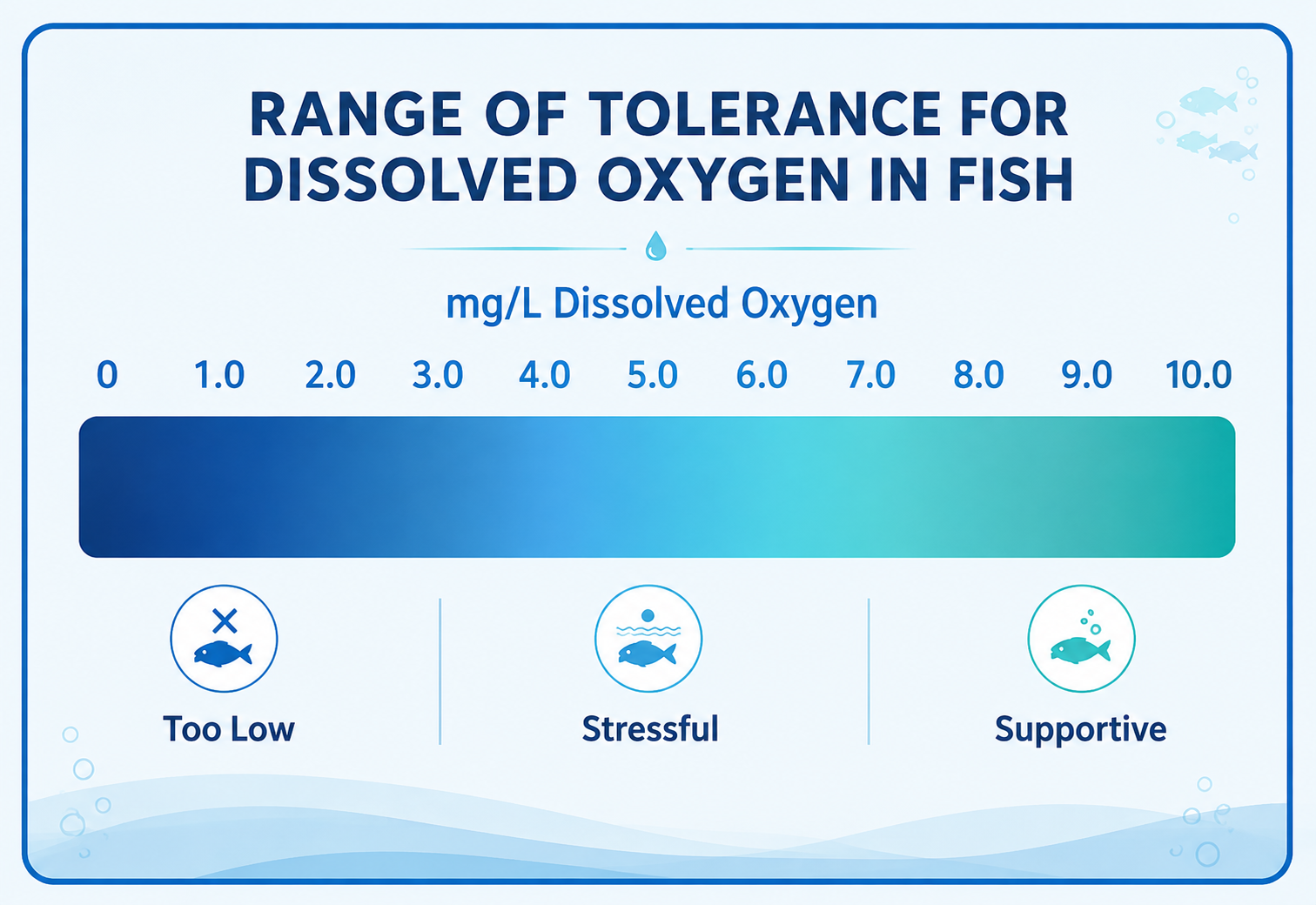
Source - Dissolved Oxygen Factsheet
Factors That May Affect DO Concentration in Water
The DO concentration in water may be affected by the following factors.
- Temperature: DO in water may be affected by temperature variations. The DO concentration may get low at high temperatures and vice-versa.
- Salinity: Many solid wastes produced during processes may contain high level of salt. This salt carries charge, which may be attracted to water molecules in the solution
- Pressure: Dissolved oxygen is affected by atmospheric pressure. When the atmospheric pressure increases the partial pressure of oxygen increases and vice-versa.
- Humidity: DO level in water may be affected by water vapor or humidity. The partial pressure of oxygen increases with increasing humidity, and vice versa.
Methods of Measuring Dissolved Oxygen in Water and Wastewater Plants
Dissolved oxygen is measured in various ways, including iodometry, colorimetry, and electroanalytical methods. In this, iodometry and colorimetry are often performed in lab settings, and are one-time measurement techniques, with limited possibilities. However, most process owners rely on electroanalytical methods for oxygen measurement. They feature polarographic and galvanic oxygen probes. These oxygen probes work on the principle of oxidation and reduction.
These probes are attached to digital dissolved oxygen meters. There are two types of meters used - portable meters and benchtop meters. Among these, portable meters are compact sized and can be used anywhere. These meters vary in testing method, function, and design. Our selection features portable dissolved oxygen sensors, which have been extensively used in water and wastewater treatment plants.
How Do Portable Dissolved Oxygen Measuring Instrument Works?
The dissolved oxygen meters feature a probe or sensor and permeable or semipermeable membrane. The amount of oxygen diffuses across a membrane into a sensor or probe. When the oxygen reaches the sensor, a reduction reaction occurs, and an electrical signal is produced. This signal produces a readable measurement on a meter.
How to Choose the Dissolved Oxygen Monitoring Equipment for Your Application
Choosing the right portable DO meter can be a daunting task. The following tips will be helpful in this context.
- Application Requirements: Where do you plan to perform the dissolved oxygen measurement - in the lab or the field? How much water volume will be measured? You selection criteria would depend on these answers.
- Ease of Use: Although all portable DO meters are designed to measure the dissolved oxygen, they may not be easy to use. Some may require specialized training and need to be handled only by experts, so, ensure to focus on the ease of use whenever choosing the model.
- Data Accuracy: Dissolved oxygen measurements will help users to decide upon the course of water treatment. So, you need to check on the data accuracy prospect.
Maintenance Tips for portable Dissolved Oxygen Meters
Although designed for challenging work environments, it must be maintained properly to ensure their lasting performance. The following are some maintenance tips that would help maintain the dissolved oxygen meter for water treatment in good condition.
- Calibrate: This can be done using an appropriate calibration solution. Ensure to calibrate the device to the level of precision required for your application by following the recommendations made by the manufacturer.
- Clean the Dissolved Oxygen Meter: The dissolved oxygen probe is inserted into the sample for testing. Hence, it must be cleaned with distilled water after every use. Do not use tap water or unfiltered water for cleaning because it can affect the performance of the electrode.
- Check the Levels of Electrolyte Solution: Check the level of electrolyte solution in the probe. If it has ended, it is advisable to refill it following the manufacturer's guidelines.
- Store the Device Properly: Store the optical dissolved oxygen meter properly when not using it. Ensure to store the dissolved oxygen probe in electrolyte-filled storage cap or the manufacturer's recommended storage solution.
- Inspect the Membrane: An essential component of the DO probe is the membrane surrounding it. Check it frequently for any noticeable signs of wear, fouling, or damage.
- Check on Temperature Compensation: This is one of the vital features to ensure the accurate reading and reliable measurements of dissolved oxygen in water especially when there is a variation in the temperature of water.
- Replace Sensors: Sensors are prone to rupture or lose accuracy over time. The lifespan of several probes that have replaceable sensors should be taken into consideration, and the sensor must be replaced as needed.
- Follow Manufacturers Guidelines: Always refer to the detailed routine maintenance guidelines your DO probe's manufacturer has provided. It's possible that different probes have particular needs and requirements.
Frequently Asked Questions
1. How do I calibrate a dissolved oxygen meter?
The sensor should be immersed in a calibration solution with a specific oxygen level during calibration. This solution should be at the same temperature as the sample you are going to evaluate and should not have any dissolved oxygen. The meter is thus modified to correspond to the expected value, guaranteeing accuracy in measurements. After being taken out of the span-point solution, the probe is rinsed with either distilled or deionized water.
2. What are the units of measurement for dissolved oxygen?
Milligrams per liter (mg/L), parts per million (ppm), and percent saturation (%) are the most popular units for dissolved oxygen measurements.
3. What are the common sources of measurement errors in dissolved oxygen meters?
Common sources of error include temperature variations, calibration errors, sensor contamination and fouling, electrode deterioration, air bubbles on the sensor membrane or in the sample, drifts, etc.
4. Can dissolved oxygen meters be used in both freshwater and saltwater environments?
Yes, dissolved oxygen meters can be used in both types of environments. However, the DO meter used in saltwater is made of materials with a coating that resist corrosion.
5. Can a turbulent application or bubbles affect DO reading?
Yes, bubbles can affect the reading and would probably fluctuate or settle on, the membrane itself.
6. What factors can affect the accuracy of DO readings?
There are various factors affecting the accuracy of dissolved oxygen in a sample, including salinity, pressure, temperature, and altitude. Cold water possesses more dissolved oxygen than hot water.