
Water Conductivity Measurement: A Complete Guide
Posted by David Cannon on 30th Sep 2026
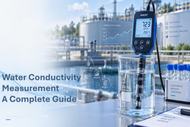
Water conductivity refers to the ability of water to conduct an electrical current, which is primarily influenced by the dissolved ions present in the water. As the concentration and type of these ions change, conductivity can also change, making it a useful indicator of variations in water chemistry. In industrial water treatment, conductivity can provide insight into changes in water quality and treatment performance. It can also help facilities determine whether water is suitable for a specific process or reuse application.
Conductivity readings can be particularly useful for monitoring systems where consistent water chemistry is important, such as filtration, reverse osmosis, and water recycling processes. However, interpreting a conductivity reading requires an understanding of the factors that influence it and the way the measurement is performed.
Factors That Affect Conductivity of Water
Several factors can influence conductivity readings. Understanding these variables is important when performing water conductivity testing or comparing measurements from different points in a treatment process.
- Dissolved Ions: The concentration of dissolved ions is one of the primary factors affecting conductivity. Increasing the concentration of ionic substances generally increases the water's ability to conduct electricity. However, the effect depends on the type and mobility of the ions present.
- Ion Type and Mobility: Different ions contribute differently to conductivity because they have different electrical charges and mobility in water. As a result, conductivity cannot be used by itself to determine the exact concentration of a particular contaminant.
- Temperature: Temperature has a significant effect on conductivity. As temperature increases, ion mobility generally increases, resulting in a higher conductivity reading. For this reason, many conductivity instruments use temperature compensation to provide readings referenced to a specified temperature.
- Water Composition: Changes in the source water or the addition of chemicals during treatment can change the ionic composition and therefore affect conductivity. Mixing different wastewater streams can also alter the resulting conductivity.
- Treatment Processes: Processes, such as ion exchange, reverse osmosis, filtration, and chemical treatment can change the dissolved ionic content of water. Monitoring conductivity before and after treatment can therefore provide useful information about changes in water chemistry.
How Is Water Conductivity Measured?
Water conductivity measurement is typically performed using a conductivity meter equipped with a conductivity cell or probe. The instrument measures the ability of water to conduct an electrical current and converts the result into a conductivity value.
The measurement process generally involves the following steps:
- Probe Placement: The conductivity probe is placed in a water sample or installed directly in a process line where conductivity measurement in water is required.
- Electrical Signal Application: The instrument applies an electrical signal between electrodes within the conductivity cell.
- Conductance Measurement: Dissolved ions in the water allow electrical current to pass between the electrodes. The meter measures this electrical response, known as conductance.
- Conductivity Calculation: The instrument uses the cell constant, which accounts for the geometry and spacing of the electrodes, to calculate the conductivity of water. The result is typically displayed in units such as microsiemens per centimeter (µS/cm) or millisiemens per centimeter (mS/cm).
- Temperature Compensation: As conductivity changes with temperature, many instruments measure temperature simultaneously and apply automatic temperature compensation to provide a temperature-referenced reading.
- Calibration: Water conductivity testing should include routine calibration using standard solutions with known conductivity values. Calibration helps maintain measurement accuracy and should be performed according to the instrument manufacturer's recommendations.
- Result Recording and Monitoring: Once the reading stabilizes, the conductivity value is recorded and evaluated. Measuring water conductivity can be performed using portable instruments for periodic testing or online systems for continuous process monitoring.
How to Choose a Conductivity Meter for Water?
Selecting a conductivity meter for water requires facilities to consider the characteristics of the water, operating conditions, and purpose of the measurement. The following factors can help determine which instrument best suits a particular industrial application.
- Conductivity Range: Select a meter that covers the expected conductivity range of the water being measured. Consider both normal and potential operating conditions to avoid readings outside the instrument's range and maintain reliable conductivity measurement in water.
- Measurement Accuracy: Determine the level of accuracy required for the application before selecting an instrument. Routine process monitoring may require different accuracy than laboratory analysis or applications where conductivity readings support specific water-quality or treatment decisions.
- Temperature Range and Compensation: Choose an instrument that can operate within the process temperature range. Since temperature affects conductivity, select a meter with suitable temperature compensation when the application requires consistent readings under changing water temperatures.
- Installation Method: Select a portable meter when operators need periodic sampling at different locations. For continuous water conductivity testing, consider an online instrument that can monitor a specific treatment point and provide readings without requiring regular manual sampling.
- Water Chemistry: Evaluate the water's ionic composition, potential contaminants, and tendency to cause electrode fouling. These conditions can influence sensor selection, installation requirements, and maintenance needs, particularly when the meter operates continuously in demanding industrial water-treatment environments.
- Calibration and Maintenance: Choose an instrument that supports practical calibration and routine maintenance. Regular calibration helps maintain measurement reliability, while accessible probes and straightforward cleaning procedures can make ongoing measuring water conductivity easier for plant operators.
- Process Requirements: Consider where and why the facility needs conductivity data. RO systems, water recycling processes, boiler-water treatment, cooling systems, and process-water applications may require different measurement locations, monitoring frequencies, and instrument configurations.
- Monitoring and Data Requirements: Determine whether operators need local readings, continuous monitoring, data logging, alarms, or integration with a control system. These requirements can influence the type of conductivity meter, communication features, and installation configuration appropriate for the application.
Improve Your Industrial Water Treatment Process
Cannon Water Technology helps industrial facilities address water treatment requirements with filtration and separation solutions tailored to their processes. Whether you need filtration for an existing system or are planning a new water-treatment process, we can help identify practical options for your application.