
How Film-Forming Agents Prevent Corrosion in Water Systems?
Posted by David Cannon on 5th May 2026
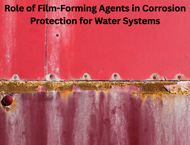
Corrosion is one of the most persistent and costly challenges in industrial water systems. From boilers and condensate lines to cooling towers and closed-loop networks, even well-managed systems remain vulnerable to oxygen ingress, carbon dioxide, and fluctuating water chemistry. Traditional treatment methods, such as oxygen scavengers, pH control, and phosphate programs, can reduce corrosion, but they often require continuous adjustment. Also, they may not provide complete surface protection, especially in complex or low-flow areas.
This is where a film forming agent offers a different approach. This post explains how a film-forming composition in water functions under real operating conditions and explores how water-soluble film-forming agents are used to prevent corrosion across industrial applications.
What is Film-Forming Agents?
A film-forming agent is a specialized corrosion inhibitor that protects metal surfaces by creating a thin, continuous barrier between the metal and the surrounding water. Unlike treatments that rely on altering overall water chemistry, these agents act directly at the surface level, forming a protective layer that limits interaction with oxygen, moisture, and dissolved contaminants. Most formulations are based on amines, fatty amines, or polymeric compounds designed to adhere to metal surfaces. The resulting layer is typically hydrophobic, which helps reduce direct exposure of the metal to corrosive elements, especially in systems with fluctuating conditions.
How Corrosion Occurs in Water Systems?
Corrosion in water systems is a localized electrochemical process that begins when metal surfaces come into contact with water containing dissolved gases and ions. The metal does not degrade uniformly; instead, microscopic anodic and cathodic sites form on the surface.
At anodic sites, metal atoms lose electrons and dissolve into the water, while at cathodic sites, dissolved oxygen or hydrogen ions consume those electrons. This ongoing reaction leads to material loss, pitting, and eventual system damage.
The rate and severity of corrosion depend on operating conditions and water chemistry. Even well-treated systems can experience corrosion if these variables are not consistently controlled.
Role of Oxygen, pH, and Dissolved Solids in Corrosion
Several factors directly influence corrosion behaviour:
- Dissolved oxygen acts as a primary driver of oxidation, accelerating metal loss
- pH levels determine the stability of metal surfaces and lower pH increases corrosivity
- Dissolved solids and salts improve water conductivity, enabling faster electrochemical reactions
Temperature fluctuations and flow dynamics can further intensify these effects, especially in high-pressure or high-temperature systems.
High-Risk Systems That Require Film-Forming Protection
Certain water systems are more prone to corrosion due to their design and operating environment. The below are a few high-risk systems that require film-forming protection.
- Boiler and condensate systems, where carbon dioxide forms carbonic acid
- Cooling water systems, exposed to oxygen and varying water quality
- Closed-loop systems, where corrosion can persist unnoticed over time
- Industrial piping networks, especially those with inconsistent flow or stagnation zones
In these conditions, corrosion often develops in areas where traditional chemical treatment does not provide consistent coverage, making surface-level protection strategies more relevant.
Types of Water-Soluble Film-Forming Agents
Water-soluble film-forming agents are designed for easy dosing, rapid dispersion, and uniform surface coverage across industrial water systems. While all of them work by creating a protective barrier, their chemistry and performance characteristics vary based on application, temperature, and system design.
- Amine-Based Film-Forming Agents: These are the most widely used in water treatment, particularly in boiler and condensate systems. Amine-based compounds, such as neutralizing and filming amines, adsorb onto metal surfaces and form a hydrophobic layer that protects against oxygen and carbon dioxide corrosion. Their volatility also allows them to travel with steam, offering protection in both liquid and vapor phases.
- Polymeric Film-Forming Agents: Polymeric formulations are used where longer-lasting and more stable films are required. These compositions in water create a more uniform and durable barrier, making them suitable for closed-loop systems and cooling water applications. They are less volatile than amines but offer stronger adhesion and resistance to mechanical disruption.
- Hybrid Film-Forming Agents: Hybrid film forming solutions combine amines with polymeric or dispersant components to deliver broader protection. These formulations are engineered to balance rapid film formation with long-term stability, making them effective in systems with variable flow, temperature, or water chemistry.
- Natural Film-Forming Agents: Natural film forming agents are gaining traction as industries move toward more sustainable water treatment practices. Derived from biodegradable or less toxic materials, these agents offer surface protection while reducing environmental impact. While still evolving, they are increasingly used in applications where regulatory compliance and environmental safety are priorities.
Selecting the right water treatment film forming agent depends on system conditions, desired film characteristics, and operational goals.
Key Benefits of Film-Forming Agents for Industrial Systems
In industrial water systems, the below advantages directly impact performance, reliability, and operating costs.
- Comprehensive Surface Protection Across the System: A well-dosed film forming solution creates a continuous barrier on metal surfaces, including areas that are difficult to treat with conventional chemicals. This includes low-flow zones, dead legs, and condensate return lines.
- Protection in Both Liquid and Vapor Phases: Many water-soluble film-forming agents, particularly amine-based formulations, can travel with steam and condense along return lines. This allows a single film-forming composition in water to protect both the liquid phase and vapor phase, which is critical in boiler and condensate systems where corrosion often occurs outside the main treatment zone.
- Reduced Dependence on Bulk Water Chemistry Control: Traditional programs rely heavily on maintaining strict pH, oxygen scavenger levels, and chemical balances. A film forming agent reduces this dependency by focusing on the metal interface. While water chemistry still matters, the system becomes less sensitive to short-term fluctuations, improving overall stability.
- Lower Chemical Consumption and Simplified Dosing: As the treatment targets surfaces rather than the entire water volume, film forming agent can often be used at lower concentrations compared to conventional inhibitors. This reduces chemical usage, simplifies dosing strategies, and can lower overall treatment costs.
- Improved Equipment Life and Reliability: By limiting direct metal exposure to corrosive elements, these agents reduce pitting, scaling, and material degradation. Over time, this leads to fewer failures, reduced maintenance requirements, and longer service life for critical equipment such as boilers, heat exchangers, and piping networks.
- Compatibility with Complex and Dynamic Systems: Industrial systems rarely operate under constant conditions. Variations in temperature, pressure, and flow can disrupt traditional treatment programs. A properly selected film forming agent in water adapts to these changes by maintaining a protective layer even under dynamic conditions, making it suitable for modern, high-demand operations.
Common Challenges and Misconceptions
While a film forming agent in water treatment offers clear advantages, its performance depends on correct application and realistic expectations. Misunderstanding how these treatments work often leads to inconsistent results or premature rejection.
- Film Forming Agents Do Not Replace All Treatment Programs: A common misconception is that it can function as a standalone solution. In practice, it works best as part of an integrated program. Parameters such as pH, dissolved oxygen, and system cleanliness still need to be managed to ensure long-term protection.
- Initial Film Formation Requires Clean Surfaces: For a film forming solution to perform effectively, it must bond directly to the metal surface. Systems with existing scale, deposits, or corrosion byproducts may prevent proper film adhesion. Pre-cleaning or system preparation is often required before introducing the treatment.
- Overdosing and Underdosing Can Impact Performance: Incorrect dosing is one of the most common operational challenges. Excessive dosage can lead to uneven film buildup or fouling, while insufficient levels may result in incomplete surface coverage. A water treatment film forming agent must be applied within a controlled range based on system conditions.
- Not All Systems Respond the Same Way: The effectiveness of a film forming agent in water varies depending on system design, flow dynamics, and water chemistry. High turbulence, temperature fluctuations, or contamination can influence how well the film forms and persists.
- Film Formation Is Not Instantaneous: Another misconception is that protection begins immediately after dosing. A film-forming composition in water requires time to adsorb and establish a continuous layer. During this period, monitoring and controlled dosing are essential.
- Film Forming Solution vs Traditional Corrosion Inhibitors: Traditional inhibitors rely on modifying bulk water chemistry, while a film forming solution focuses on creating a surface barrier. This difference can lead to confusion during implementation, particularly when transitioning from conventional programs. Understanding the distinct mode of action helps set the right expectations and ensures proper integration into existing systems.
How to Select the Right Water Treatment Film Forming Agent?
Selecting the right water treatment film forming agent is a technical decision based on system design and operating requirements not just product type.
- Evaluate System Type and Application: Different systems require different formulations. For example, boiler and condensate systems often benefit from volatile amine-based products, while closed-loop systems may require more stable, polymer-based options.
- Consider Water Chemistry and Contaminants: The presence of dissolved solids, oxygen, or existing treatment chemicals can influence how a film forming agent in water performs. Compatibility with the system’s chemistry is essential.
- Assess Operating Conditions: Temperature, pressure, and flow dynamics impact how a film forming solution behaves. High-temperature systems may require more robust formulations with greater thermal stability.
- Review Compatibility with Existing Programs: The selected product should work alongside current treatment chemicals, including biocides and dispersants, without interfering with film formation.
- Align with Operational Goals: Whether the focus is corrosion reduction, cost optimization, or sustainability, the chosen solution should support long-term system objectives, including the potential use of natural film forming agents where applicable.
Monitoring Film Performance and Sustaining Long-Term Protection
Ongoing evaluation helps confirm that the treatment continues to perform under actual operating conditions. Since the protective layer is not directly visible, assessment typically relies on a combination of indirect indicators rather than a single parameter.
- Corrosion Rate Monitoring: Corrosion monitoring tools, such as coupons or probes, provide trend-based insights into how well the film forming agent in water treatment is performing over time. A gradual reduction or stabilization in corrosion rates can indicate that the protective layer is functioning as intended.
- Visual Inspection and Surface Condition: Visual checks during maintenance cycles offer additional context. Changes in surface condition, deposit formation, or localized corrosion may point to uneven film coverage or areas where the film forming solution is being disrupted.
- Reviewing Operating Conditions: Operational data should be assessed alongside physical observations. Variations in temperature, flow rates, or water chemistry can influence how a film-forming composition in water behaves, particularly in systems with fluctuating loads.
- Adjustments Based on Performance Trends: Instead of relying on fixed benchmarks, a trend-based approach supports more informed decision-making. Dosing or program adjustments may be required over time to help maintain consistent protection as system conditions evolve.
When Should You Consider Switching to Film-Forming Agents
Adopting a film forming agent in water treatment is typically considered when existing programs do not provide stable or system-wide corrosion control. In many cases, the shift is driven by operational limitations rather than a complete failure of traditional chemistry.
You may evaluate this approach under the following conditions:
- Corrosion rates remain inconsistent despite ongoing chemical treatment
- Treatment programs require frequent adjustment to maintain control
- System design includes low-flow zones, dead legs, or extended condensate return lines
- Maintenance demands or chemical consumption are higher than expected
A film forming solution can offer an alternative by focusing on surface protection, particularly in systems where maintaining uniform water chemistry is challenging.
Industries That Benefit Most from Film-Forming Agents
The use of a film forming agent in water treatment is not limited to a single sector. Its applicability depends more on system design and operating conditions than industry alone.
- Power Generation: Boiler and condensate systems in power plants often operate under high temperature and pressure, where corrosion can develop in both liquid and vapor phases. Film-forming treatments are used to extend protection beyond the boiler itself.
- Manufacturing and Process Industries: Facilities with complex piping networks and variable loads may use film forming agents to maintain more consistent protection across different process conditions.
- HVAC and Closed-Loop Systems: Closed-loop heating and cooling systems can experience long-term corrosion if not properly maintained. A film forming agent in water may help protect internal surfaces without requiring continuous chemical adjustment.
- Food and Beverage Processing: In systems where operational efficiency and cleanliness are priorities, water-soluble film-forming agents are sometimes used to support corrosion control while aligning with broader treatment requirements.
Across these applications, the focus remains on improving surface protection in systems where traditional methods may have limitations.
Future Trends in Film-Forming Agents in Water Treatment
Advancements in film-forming composition in water are gradually shifting toward more precise and adaptable treatment approaches. As system requirements evolve, so do formulation and application methods.
Key areas of development include:
- Improved dosing control: Integration with automated systems allows more consistent and responsive chemical feed based on real-time conditions
- Enhanced formulations: Ongoing development aims to improve film stability, adhesion, and performance under varying temperatures and flow conditions
- Sustainable alternatives: Interest in natural film forming agents is increasing, particularly in applications with environmental or regulatory considerations
As industrial water systems become more complex, treatment strategies are likely to focus on flexibility, efficiency, and compatibility with broader water management programs.
Optimize Your Corrosion Control Strategy with Expert Support
Choosing the right film forming agent in water treatment requires more than just product selection, it depends on system design, operating conditions, and long-term performance goals. A tailored approach can help improve protection, reduce variability, and support more efficient operation.
Cannon Water Technology offers a range of water treatment film forming agents along with technical guidance to help you evaluate, implement, and maintain an effective corrosion control program.
If you're assessing alternatives to your current treatment or looking to improve system performance, connect with the team to discuss the right film forming solution for your application.