
Common Chemical Feed Tank Problems and How to Prevent Them
Posted by David Cannon on 13th Mar 2026
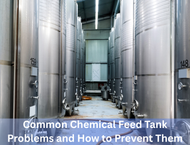
Chemical feed tanks are a foundational component in modern water treatment systems because they provide a controlled and reliable reservoir for storing and dosing treatment chemicals into water processes. In industrial, municipal, and laboratory-scale systems, these tanks are designed to safely contain chemicals such as coagulants, corrosion inhibitors, scale inhibitors, biocides, acids, and alkalinity adjusters.
Their primary function is to ensure that chemicals are delivered consistently to metering pumps or dosing systems, which then inject precise quantities into water streams. This controlled chemical introduction is critical for maintaining optimal water chemistry, protecting equipment from corrosion or scaling, and ensuring compliance with regulatory and operational water quality standards.
In advanced water treatment applications, chemical feed tanks also play a key role in process stability and operational efficiency. Properly designed tanks allow for adequate chemical mixing, dilution, and residence time before the chemical is fed into the system. Many tanks are equipped with features such as level indicators, double containment, and chemical-resistant materials (such as polyethylene) to ensure safety and compatibility with aggressive chemicals.
What a Chemical Feed Tank Does in Industrial Water Treatment Systems?
A chemical feed tank in an industrial water treatment system function as a dedicated storage and supply vessel that holds treatment chemicals before they are accurately dosed into the process water. These tanks work in conjunction with metering pumps and dosing controls to ensure chemicals are introduced at the correct concentration and flow rate.
Key functions of a chemical feed tank include:
- Chemical Storage: Safely stores treatment chemicals such as biocides, corrosion inhibitors, scale inhibitors, acids, and coagulants.
- Consistent Chemical Supply: Provides a steady chemical source to dosing pumps for uninterrupted system operation.
- Chemical Mixing and Dilution: Allows chemicals to be diluted or mixed to the required concentration before injection.
- Supports Accurate Dosing: Works with metering pumps and control systems to deliver precise chemical quantities.
- Operational Safety: Reduces spill risks and improves handling through level indicators, containment features, and chemical-resistant materials.
- Process Stability: Ensures water treatment programs maintain stable chemistry across industrial systems.
Together, these functions make chemical feed tanks an essential component in maintaining reliable, efficient, and controlled chemical dosing within industrial water treatment operations.
What Chemicals are Commonly Stored in Feed or Storage Tank?
Understanding the common chemicals stored in these tanks helps operators and water treatment professionals ensure proper chemical compatibility, safe storage, and effective dosing within the overall treatment program.
- Corrosion Inhibitors: Corrosion inhibitors are commonly stored in chemical feed tanks to protect metal components in industrial water systems such as boilers, cooling towers, and closed-loop systems. These chemicals form a protective film on metal surfaces to reduce oxidation and extend equipment life.
- Scale Inhibitors: Scale inhibitors are widely used in water treatment systems where mineral precipitation can cause deposits on equipment surfaces. These chemicals prevent minerals such as calcium carbonate and magnesium from forming hard scale.
- Biocides and Microbiological Control Chemicals: Feed tanks are frequently used to store microbiological control chemicals that prevent the growth of bacteria, algae, and biofilm in industrial water systems.
- pH Adjustment Chemicals: Maintaining the correct pH is essential for effective water treatment. Feed tanks often store chemicals used to raise or lower pH levels to maintain optimal water chemistry.
- Coagulants and Flocculants: In wastewater and clarification systems, feed tanks are used to store chemicals that assist in removing suspended solids and contaminants from water.
- Oxygen Scavengers: In boiler water treatment programs, oxygen scavengers are stored in feed tanks to remove dissolved oxygen that can cause corrosion.
|
Chemical Type |
Primary Function |
Common Application |
|
Corrosion Inhibitors |
Protect metal surfaces |
Cooling towers, boilers |
|
Scale Inhibitors |
Prevent mineral buildup |
RO systems, heat exchangers |
|
Biocides |
Control microbial growth |
Cooling towers |
|
pH Adjusters |
Maintain water chemistry |
Multiple treatment systems |
|
Coagulants/Flocculants |
Remove suspended solids |
Wastewater treatment |
Most Common Chemical Feed Tank Problems in Industry
Chemical feed tanks are essential for storing and supplying treatment chemicals in industrial water treatment systems. However, improper installation, material incompatibility, poor maintenance practices, or environmental factors can lead to several operational issues. These problems can disrupt chemical dosing accuracy, reduce treatment efficiency, and increase system downtime.
Identifying common feed tank problems early helps water treatment professionals maintain consistent chemical delivery and prevent costly equipment failures.
- Chemical incompatibility with tank material
- Chemical crystallization or sediment buildup
- Tank leakage or structural damage
- Improper tank sizing or capacity issues
- Poor mixing or chemical stratification
- Level monitoring or sensor failure
- Contamination of stored chemicals
|
Problem |
Cause |
Impact on Water Treatment System |
Preventive Measure |
|
Chemical Compatibility Issues |
Using tank material not resistant to stored chemicals |
Tank degradation, leaks, contamination |
Select chemically compatible materials such as HDPE or fiberglass |
|
Chemical Settling or Crystallization |
Improper mixing or temperature changes |
Blocked suction lines and inconsistent dosing |
Use tank mixers or agitation systems |
|
Tank Leakage or Cracks |
Aging materials, stress, or poor installation |
Chemical loss, safety hazards, environmental risk |
Conduct regular tank inspections and maintenance |
|
Improper Tank Sizing |
Undersized or oversized tank selection |
Frequent refilling or chemical stagnation |
Size tanks based on dosing rate and operational demand |
|
Inadequate Mixing |
Lack of agitation for certain chemicals |
Uneven chemical concentration |
Install mechanical mixers or recirculation systems |
|
Level Sensor Failure |
Faulty level gauges or sensors |
Risk of pump running dry or overfilling |
Use reliable level monitoring and alarms |
|
Chemical Contamination |
Exposure to debris, moisture, or incompatible chemicals |
Reduced chemical effectiveness |
Maintain sealed tanks and proper storage practices |
Key Preventive Maintenance Practices for Chemical Feed Tanks
Preventive maintenance of chemical feed tanks is essential to ensure consistent chemical dosing, maintain water treatment efficiency, and prevent operational disruptions in industrial and municipal treatment systems.
- Routine Visual Inspection:
Regular visual inspections help identify early signs of damage or operational issues.
What to check:
- Cracks, leaks, or deformation in the tank walls
- Signs of corrosion or chemical attack
- Loose fittings, bolts, or mounting brackets
- Damage around inlet, outlet, and vent connections
- Chemical residue buildup around seals and lids
- Tank Cleaning and Residue Removal:
Chemical feed tanks can accumulate sludge, precipitates, or crystallized chemicals over time, especially when storing oxidizers or high-concentration chemicals.
Recommended cleaning steps:
- Drain the tank completely
- Flush with compatible cleaning solution or water
- Remove sediment or chemical buildup
- Rinse thoroughly to avoid contamination of new chemical batches
- Inspection of Tank Accessories:
Chemical feed tanks typically include several supporting components that require maintenance.
Components to inspect:
- Level indicators or level transmitters
- Vent filters and pressure relief devices
- Agitators or mixers (if installed)
- Calibration columns
- Valves, gaskets, and piping connections
- Checking Chemical Compatibility:
Chemical compatibility is critical for maintaining the structural integrity of feed tanks.
Maintenance teams should periodically verify:
- Tank material compatibility with stored chemicals
- Chemical concentration limits
- Temperature resistance of tank material
- Leak Detection and Seal Maintenance:
Leaks are one of the most common issues in chemical feed systems. Even small leaks can lead to chemical loss, safety hazards, and environmental risks.
- Tightening threaded fittings
- Inspecting gaskets and O-rings
- Replacing worn seals
- Checking flange connections
- Calibration of Level Monitoring Systems:
Many chemical feed tanks use level sensors or transmitters to monitor chemical inventory.
Maintenance tasks include:
- Verifying sensor calibration
- Cleaning sensor probes
- Testing alarm systems
- Confirming accurate level readings
Understanding the most common chemical feed tank problems and addressing them proactively is essential for maintaining reliable system performance. Regular inspections, routine cleaning, proper chemical compatibility checks, and timely replacement of worn components can significantly reduce the risk of operational failures. In addition, implementing a structured preventive maintenance program allows operators to detect early warning signs before they escalate into major problems.