
pH Meter Calibration and Maintenance Guidelines
Posted by David Cannon on 30th Nov 2020
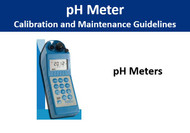
When discussing the quality of water, pH measurement plays an important role. A pH meter is extremely efficient and provides accurate results about the nature of water in terms of alkalinity or acidity. The pH electrodes are the main component of a pH meter. The glass and reference electrodes are housed inside a thin glass membrane. A pH meter determines the pH level by measuring the potential difference between the two. As the chemistry of pH electrodes is susceptible to change, pH meter calibration becomes an important step. Regularly calibrating a pH meter will only increase the reading accuracy and operating efficiency in spite of repeated measurements. This post highlights the best practices that help calibrate accurately and extend the life of the meter.
Impact of Inaccurate pH Readings on Water Treatment
Accurate pH measurement is essential for maintaining consistent water treatment performance, controlling chemical reactions, and meeting water quality requirements. In industrial and municipal water treatment facilities, even small deviations in pH readings can affect treatment efficiency, chemical consumption, equipment performance, and the reliability of water quality monitoring.
A pH meter provides operators and plant engineers with information about the acidity or alkalinity of water, helping them determine whether treatment processes are operating within their specified pH ranges.
When pH readings are inaccurate due to electrode contamination, improper calibration, sensor deterioration, or incorrect measurement practices, operators may make process adjustments based on misleading data.
- Reduced Water Treatment Efficiency
- Incorrect Chemical Dosing and Increased Operating Costs
- Poor Process Control and Operational Instability
- Inconsistent Water Quality Monitoring and Compliance Risks
- Increased Risk of Corrosion, Scaling, and Equipment Damage
Following table summarizes how inaccurate pH readings can affect different water treatment operations.
|
Operational Area |
Impact of Inaccurate pH Readings |
Potential Consequence |
|
Water treatment efficiency |
Incorrect treatment conditions |
Reduced contaminant removal |
|
Chemical dosing |
Overdosing or underdosing |
Increased chemical costs |
|
Process control |
Incorrect automated adjustments |
Unstable treatment operations |
|
Quality monitoring |
Misleading measurement records |
Compliance and quality risks |
|
Equipment protection |
Improper control of water chemistry |
Corrosion, scaling, and maintenance costs |
How Often Should You Calibrate a pH Meter?
The frequency of pH meter calibration depends on how often the instrument is used, the type of samples being tested, electrode condition, and the level of measurement accuracy required.
In water and wastewater treatment facilities, regular calibration is important because pH readings are often used to monitor water quality, control chemical dosing, and maintain process conditions. An inaccurate reading can lead to incorrect chemical adjustments and affect treatment performance.
Factors That Affect pH Meter Calibration Frequency
Several operating conditions influence how frequently a pH meter should be calibrated:
- Frequency of Use
- Sample Composition
- Required Measurement Accuracy
- Electrode Condition and Maintenance
- Changes in Operating Conditions
How to Clean and Maintain a Digital pH Probe?
A digital pH probe requires regular cleaning and proper maintenance to deliver accurate and consistent pH measurements. During water and wastewater testing, the probe can come into contact with suspended solids, oils, scale deposits, chemical residues, and other contaminants.
These substances may accumulate on the glass sensing membrane or reference junction, affecting electrode response and causing unstable readings, slow response times, or calibration errors.
- Rinse the pH Probe After Each Measurement
- Clean the Probe to Remove Deposits and Contaminants
- Store the pH Probe in the Recommended Storage Solution
- Inspect the Glass Membrane and Reference Junction Regularly
- Recalibrate the Probe After Cleaning and Maintenance
- Maintain a Regular pH Probe Maintenance Schedule
3 Easy-To-Follow Guidelines for pH Meter Calibration and Maintenance
The following practices help you calibrate and extend the life of a pH meter.
- Calibrate pH Meter Frequently: With ageing and continuous use, the performance of the electrode will stray and provide offset values over time. To get an accurate measurement, it's important to identify the changes to the electrode's properties. This is also known as an offset error. Microprocessors of pH meters perform multi-point calibration, where the real slope of the electrode compares to its intended slope. This determines the offset error. Using the real slope and offset error, the processor will regulate the measurements to compensate electrode changes. This helps calibrate your pH meter precisely.
- Clean, Store and Recondition Electrodes Properly: Generally, electrodes are designed to connect pH meter through a BNC connector or cable. Regardless of the type of electrodes, one must store electrodes in storage solution instead of keeping them in deionized water. The storage solution comprises a mix of chemicals preventing the growth of bacteria. This helps prolong the electrode's life. The buffer 4 solution is the most widely used storage solution for pH electrodes. Also, it is important to rinse the electrode after each use rather than wiping it with a cloth. Importantly, different pH meters require different care. Thus, don't forget to refer to the product guidelines and manuals to get optimal results.
- Submerge Electrodes While Taking Readings: The accuracy of your pH meter highly relies on the use of the electrode. While taking a pH reading, ensure the glass bulb of the electrode and the junction of the reference electrode are submerged properly inside the solution. Since the glass bulb is the primary source of interaction, ensure it is exposed to the substance that will improve the accuracy of readings as well as the response time of the pH meter. To understand how far to submerge a pH meter, one must know the place where the electrode bulb is located and how it needs to be submerged to cover the junction.
Accurate pH measurement is a fundamental requirement for reliable water treatment operations. Inaccurate readings can affect chemical dosing, treatment efficiency, automated process control, water quality monitoring, and equipment protection.
For water treatment plant engineers, operators, and supervisors, maintaining reliable pH measurement is essential for controlling operating costs, minimizing process disruptions, and achieving consistent treatment results.
FAQ
- How do you calibrate a digital pH meter?
Rinse the electrode with distilled or deionized water, then immerse it in a fresh pH buffer solution. Allow the reading to stabilize and confirm the calibration. Repeat the process with a second buffer solution and, when required, a third buffer. Select buffers that bracket the expected sample pH.
- Why won't my pH meter calibrate?
A pH meter may fail calibration because of contaminated or expired buffer solutions, a dirty or damaged electrode, a clogged reference junction, or an electrode that has dried out. Check the buffers, clean and condition the electrode, and repeat calibration according to the manufacturer's instructions.
- Can a pH electrode be stored in distilled or deionized water?
No. Prolonged storage in distilled or deionized water is generally not recommended because it can affect the electrode's reference system and performance. Use the storage solution specified by the electrode manufacturer.
- What happens if a pH meter is incorrectly calibrated?
Incorrect calibration can produce systematic measurement errors, resulting in inaccurate pH readings. In water treatment operations, this may lead to inappropriate chemical dosing, ineffective pH adjustment, and unreliable process monitoring.