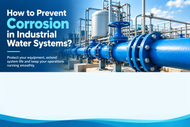
How to Prevent Corrosion in Industrial Water Systems?
Posted by David Cannon on 8th Oct 2026
Industrial water systems rely on pipes, tanks, heat-transfer equipment, boilers, and other components that remain in contact with water during operation. Over time, exposure to certain water conditions can cause metal surfaces to deteriorate, creating maintenance concerns and affecting system reliability.
The extent of this deterioration can vary depending on the equipment, materials, and operating environment. Understanding why it occurs and how it can be managed helps operators make informed decisions about water treatment and system maintenance.
This post explains how to prevent corrosion in water pipes and industrial water systems, covering the factors that contribute to it, its potential effects, monitoring practices, and practical control methods.
What Is Corrosion in Industrial Water Systems?
Corrosion is the deterioration of a metal caused by chemical or electrochemical interactions between the metal and its surrounding environment. In an industrial water system, these interactions occur when water comes into contact with metallic components such as pipes, tanks, heat exchangers, boilers, cooling equipment, valves, and other wetted surfaces.
The process can involve oxidation of the metal, with metal ions entering the water or forming corrosion products on the surface. The form of deterioration can vary by material and operating conditions and may include uniform corrosion, localized corrosion such as pitting, galvanic corrosion, or microbiologically influenced corrosion.
Corrosion is different from scale formation and other types of fouling. Scale generally refers to deposits that form when dissolved minerals precipitate and accumulate on surfaces, while fouling is a broader term for unwanted material that accumulates on equipment surfaces, including biological matter, suspended solids, and other deposits. Corrosion, in contrast, involves deterioration of the underlying material itself. These processes can occur together, and corrosion products can become part of accumulated deposits.
Understanding this distinction is important when evaluating an industrial water system because the appropriate treatment depends on whether the primary issue is metal deterioration, mineral deposition, fouling, or a combination of these conditions.
Why Does Corrosion Occur in Industrial Water Systems?
Several water chemistry, operating, and material conditions can contribute to metal deterioration in industrial water systems:
- Water Chemistry and pH: pH affects the stability of corrosion products and protective surface films. Other aspects of water chemistry, including alkalinity and dissolved ions, also affect the electrochemical conditions at metal surfaces.
- Dissolved Oxygen and Oxidizing Conditions: Dissolved oxygen participates in electrochemical reactions involved in the deterioration of many metals. Other oxidizing substances, including certain disinfectants, may also affect metal surfaces.
- Temperature: Higher temperatures can accelerate chemical and electrochemical reaction rates and alter oxygen solubility and the stability of protective films. The response varies among metals and water chemistries.
- Flow Velocity and Stagnant Areas: Water movement affects the transport of dissolved substances to metal surfaces. High velocity and turbulence can remove protective films and contribute to erosion-corrosion, while stagnant or low-flow areas can promote localized attack.
- Dissolved Salts and Contaminants: Chloride and sulfate ions are among the dissolved species associated with increased water corrosivity. Higher concentrations of dissolved salts also increase electrical conductivity, supporting the electrochemical reactions involved in corrosion.
- Material Compatibility: Metals and alloys differ in their resistance to specific water environments. When dissimilar metals are electrically connected and exposed to the same water, galvanic corrosion can cause preferential attack on the more active metal.
- Microbiologically Influenced Corrosion (MIC): Microorganisms can form biofilms on metal surfaces and create localized chemical conditions that promote deterioration. Certain microbial activity can also produce corrosive compounds, making MIC a concern in systems with suitable conditions for microbial growth.
What Problems Can Corrosion Cause in Industrial Water Systems?
Corrosion can damage metal components, affect system performance, and increase maintenance demands over time.
- Metal Loss and Thinning: Corrosion removes material from metal surfaces. Uniform attack can gradually reduce wall thickness, while localized forms such as pitting can create deeper penetration over smaller areas.
- Leaks and Component Failures: Continued metal loss can weaken pipes, tubes, tanks, valves, and other pressure-containing components. Localized penetration can eventually produce leaks or contribute to component failure.
- Reduced Equipment Service Life: Progressive deterioration reduces the remaining thickness and structural condition of affected components, potentially requiring repair or replacement sooner than expected.
- Changes in Flow or Heat-Transfer Performance: Corrosion products can accumulate inside piping and equipment, reducing available flow area or contributing to deposits on heat-transfer surfaces. These deposits can increase flow resistance and interfere with heat transfer.
- Water Contamination: Corrosion can release metals and corrosion products into the water. The specific substances released depend on the materials in contact with the water and the corrosion conditions.
- Increased Inspection and Maintenance Requirements: Systems affected by corrosion may require more frequent inspection, cleaning, repairs, monitoring, or component replacement to assess and manage deterioration.
How to Prevent Corrosion in Industrial Water Systems?
Several aspects of water treatment and system management can help control corrosion in industrial water systems. The following practices are worth considering when developing a prevent corrosion method in water system applications.
- Manage Water Chemistry: Maintain relevant water chemistry parameters within ranges appropriate for the system, materials, and treatment program. The specific targets will depend on the water quality and operating requirements of the application.
- Use Appropriate Corrosion Inhibitors: Corrosion inhibitors can reduce metal attack by forming protective films or modifying reactions at the metal-water interface. Phosphate- and silicate-based inhibitors are examples used in water treatment, but the appropriate chemistry, concentration, and feed rate depend on the application. Controlled dosing helps maintain the intended treatment concentration.
- Control Dissolved Oxygen Where Applicable: Dissolved oxygen participates in electrochemical reactions associated with corrosion of many metals. Where the process allows, reducing unnecessary oxygen exposure or controlling oxygen levels may form part of the treatment approach.
- Manage Temperature and Flow Conditions: Keep temperature and flow conditions within the ranges appropriate for the equipment and treatment program. Higher temperatures can increase reaction rates, while excessive velocity or turbulence can contribute to erosion-corrosion in susceptible materials.
- Select Compatible Materials: Choose pipes, tanks, heat-transfer components, valves, and other wetted materials based on the water chemistry and operating environment. Material selection is also relevant when dissimilar metals are connected, since electrical contact between different metals in an electrolyte can produce galvanic corrosion.
How to Monitor Corrosion in Industrial Water Systems?
A monitoring program can combine water analysis, direct corrosion measurements, equipment inspections, and treatment data to assess system conditions.
- Routine Water Chemistry Testing: Measure relevant parameters such as pH, alkalinity, conductivity, temperature, dissolved oxygen, and selected ions based on the system and treatment program. Comparing results over time can help identify changes that may affect corrosion control.
- Corrosion Coupons: Expose metal coupons representative of system materials to the water for a defined period, then assess weight loss and surface condition. Coupon testing provides a measure of general corrosion rate at the exposure location.
- Corrosion Probes and Monitoring Equipment: Electrochemical probes and other corrosion-monitoring instruments can provide corrosion-rate measurements or detect changes over shorter intervals than conventional coupon testing. The suitability of a particular instrument depends on the water and system conditions.
- Equipment and Pipe Inspections: Inspect accessible piping, tanks, heat-transfer equipment, valves, and other wetted components for wall thinning, pitting, corrosion products, deposits, or other signs of deterioration. Direct examination can help identify where damage is occurring and support further assessment.
- Track Treatment and Operating Data: Record relevant treatment parameters, such as inhibitor dosage or residuals where applicable, alongside operating conditions such as temperature and flow. Comparing these records with corrosion measurements can help assess corrosion control in water treatment programs.
Common Corrosion Prevention Mistakes in Industrial Water Systems
Avoiding a few common practices can make corrosion assessment and treatment more consistent:
- Relying on Visible Damage Alone: Treating leaks, discoloration, or deposits without checking the underlying water chemistry can leave the contributing conditions unidentified.
- Using Treatment Without Checking System Compatibility: Applying chemicals or other controls without considering water chemistry, equipment design, materials of construction, and operating conditions can result in an unsuitable treatment approach.
- Skipping Treatment Performance Checks: Continuing a treatment program without reviewing water chemistry, treatment residuals where applicable, corrosion-rate data, or inspection findings makes it difficult to determine whether the program is performing as intended.
- Overlooking Changes in Operating Conditions: Failing to account for changes in water source, temperature, flow, equipment configuration, production conditions, or chemical dosing can leave an existing treatment program out of alignment with current system conditions.
- Inconsistent Testing and Maintenance: Skipping scheduled water testing, inspections, equipment checks, or treatment reviews can make changes in system conditions harder to identify and trends more difficult to evaluate.
Explore Corrosion Control Solutions for Your System
Cannon Water offers corrosion inhibitors, chemical feed equipment, and corrosion monitoring products for commercial and industrial water treatment applications. Our product range includes closed-loop corrosion inhibitor treatments, corrosion coupon racks, and corrosion-rate sensors for cooling and process water monitoring.