Key Challenges in Industrial Water Treatment and Practical Solutions
Posted by David Cannon on 30th Jun 2026
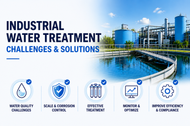
Industrial water treatment plant process plays a critical role in keeping manufacturing processes efficient, protecting valuable equipment, and helping businesses meet environmental regulations. Industries such as food and beverage, pharmaceuticals, power generation, chemical processing, healthcare, and manufacturing all depend on high-quality water for daily operations. However, treating industrial water is becoming increasingly challenging due to changing water quality, stricter compliance requirements, rising operational costs, and the need for greater sustainability.
Even a well-designed water treatment system can experience issues such as scaling, corrosion, membrane fouling, microbial growth contamination, inconsistent water quality, and high maintenance demands. If these challenges are not addressed promptly, they can reduce system efficiency, increase energy and chemical consumption, cause unexpected equipment downtime, and shorten the lifespan of critical assets.
By identifying the root causes and implementing the right treatment technologies, monitoring practices, and maintenance plans, businesses can improve water quality, reduce operating costs, enhance equipment performance, and support long-term regulatory compliance.
In this guide, we'll explore the key challenges in industrial water treatment, explain why they occur, and discuss practical commercial water treatment solutions that help industrial facilities optimize their water treatment processes while improving operational reliability and sustainability.
Common Stages of Industrial Water Treatment Process Challenges
The industrial water treatment process is a series of steps designed to improve water quality so it can be safely and efficiently used in manufacturing, processing, cooling, boiler systems, and other industrial applications. Since the quality of incoming water varies depending on its source, each facility requires a treatment process tailored to its specific operational needs and water quality requirements.
A typical industrial water treatment plant process begins with pre-treatment, where large particles, sediment, suspended solids, and other contaminants are removed through screening, filtration, or clarification. This stage helps protect downstream equipment and improves the performance of the entire treatment system.
Typical stages include:
- Pre-Treatment: Removes large particles, sediment, suspended solids, and debris through screening, filtration, or clarification.
- Water Softening: Reduces hardness minerals like calcium and magnesium to prevent scale formation.
- Primary Filtration: Eliminates fine suspended particles that can affect downstream equipment.
- Advanced Purification: Uses technologies such as Reverse Osmosis (RO), Ultrafiltration (UF), Nanofiltration (NF), or Deionization (DI) to remove dissolved contaminants.
- Chemical Treatment: Controls scaling, corrosion, microbial growth, and maintains proper pH levels.
- Disinfection: Eliminates bacteria, viruses, and other microorganisms using chlorine, ozone, or UV systems.
- Monitoring & Control: Continuously tracks water quality parameters to maintain system performance.
- Wastewater Treatment & Reuse: Treats process wastewater for safe discharge or recycling.
Common Industrial Water Treatment Challenges
Changes in source water quality, inadequate system maintenance, improper chemical treatment, and aging infrastructure can all affect system performance.
Understanding these common industrial water treatment problems helps facility managers, and engineer teams identify potential risks early, reduce operational disruptions, and improve the overall efficiency of their water treatment process.
- Poor Raw Water Quality - Raw water quality can vary significantly depending on its source, including municipal supplies, surface water, groundwater, or recycled water.
- Scale Formation - Scale occurs when minerals such as calcium, magnesium, and silica precipitate and accumulate on equipment surfaces. This buildup restricts water flow and reduces heat transfer efficiency, particularly in boilers, cooling towers, and heat exchangers.
- Corrosion in Equipment - Corrosion develops when water chemistry is not properly controlled. Factors such as low or high pH, dissolved oxygen, chlorides, and aggressive chemicals can gradually deteriorate metal surfaces throughout the water system.
- Membrane Fouling - Suspended solids, biological matter, scaling minerals, and organic contaminants can clog membrane surfaces and reduce filtration performance.
- Biological Growth - Warm, nutrient-rich water can promote the growth of bacteria, algae, fungi, and biofilms within industrial water systems. Biological contamination is particularly common in cooling towers, storage tanks, and distribution piping if disinfection is not properly managed.
- Chemical Dosing Problems - Chemical treatment is essential for controlling scaling, corrosion, microbial growth, and water chemistry. However, incorrect dosing caused by equipment malfunction, poor calibration, or inconsistent monitoring can reduce treatment effectiveness and create additional operational issues.
Each of these challenges can negatively affect production efficiency, equipment reliability, maintenance costs, and regulatory compliance if left unresolved.
Water Management Challenges Across Industries
Here are the most common water management challenges that affect manufacturing facilities and operational issues.
- Water Scarcity and Supply Reliability - Many industries face limited access to reliable freshwater sources due to drought, population growth, and increasing demand. An inconsistent water supply can disrupt production schedules and increase operational risks.
- Variable Raw Water Quality - The quality of incoming water often changes with seasons, weather conditions, or the source of supply. These fluctuations require treatment systems to adapt continuously.
- Rising Water and Wastewater Costs - Water procurement, treatment, discharge, and disposal costs continue to increase, placing pressure on operating budgets.
- Regulatory Compliance - Environmental regulations governing water use, wastewater discharge, and contaminant removal are becoming more stringent across industries.
- Scaling, Corrosion, and Fouling - Mineral deposits, corrosion, and membrane fouling reduce equipment efficiency and increase maintenance frequency.
- Water Reuse and Recycling Challenges - Many facilities aim to reduce freshwater consumption by reusing treated wastewater, but achieving consistent recycled water quality requires advanced treatment systems.
- Aging Water Infrastructure - Older pipelines, pumps, valves, storage tanks, and treatment equipment becomes less reliable over time.
- Chemical Management - Maintaining proper chemical dosing is essential for controlling scaling, corrosion, and biological growth.
This progression moves naturally from understanding the process, to identifying operational problems, to addressing broader water management strategies and solutions that matching the needs of plant engineers, facility managers, and procurement professionals.
What Are The Industrial Water Treatment Solutions?
Industrial water treatment solutions are designed to improve water quality, protect equipment, and ensure reliable plant operations across a wide range of industries. There are mainly two types of solution you need to follow.
- Physical Solutions
The type of physical filtration system used depends on factors such as the source water quality, particle size, flow rate, and the specific requirements of the industrial application.
- Multimedia Filters - Multimedia filters use multiple layers of filtration media, such as anthracite, sand, and gravel, to remove suspended solids and fine particles from water.
- Cartridge Filters - Cartridge filters provide fine filtration by capturing smaller particles that pass through primary filtration systems. They are commonly installed after multimedia filters as a polishing step to protect sensitive equipment and improve overall water quality.
- Screen Filters - Screen filters use a reusable metal or polymer mesh screen to remove relatively large suspended particles from water. They are particularly effective where the primary objective is to protect pumps, valves, irrigation systems, heat exchangers, and other equipment from debris.
- Chemical Solutions
While physical filtration removes suspended particles and debris, chemical treatment is essential for controlling water chemistry and preventing problems that cannot be addressed through filtration alone.
- Scale Inhibitors - Scale inhibitors are specialty chemicals that prevent dissolved minerals, such as calcium carbonate, calcium sulfate, and silica, from forming hard deposits on equipment surfaces. Instead of allowing minerals to crystallize and adhere to pipes and heat transfer surfaces, these chemicals keep them suspended in the water until they can be removed through normal system operation.
- Corrosion Inhibitors - Corrosion inhibitors help protect metal surfaces from chemical and electrochemical reactions that can damage equipment over time. They work by forming a thin protective layer on metal surfaces or by stabilizing water chemistry to reduce corrosive conditions.
- Biocides - Biocides are chemical treatments designed to control microbial growth and maintain hygienic operating conditions within industrial water systems. Depending on the application, facilities may use oxidizing or non-oxidizing biocides as part of a comprehensive water treatment program.
Best Practices to Prevent Water Treatment Problems
Proactive water treatment management helps industrial facilities minimize unexpected equipment failures, maintain consistent water quality, reduce operating costs, and comply with environmental regulations. Instead of reacting to water treatment issues after they occur, implementing preventive strategies can improve system reliability and maximize the performance of water treatment equipment.
- Conduct Regular Water Quality Testing - Routine water analysis is the foundation of an effective industrial water treatment program. Monitoring parameters such as pH, hardness, conductivity, total dissolved solids (TDS), alkalinity, dissolved oxygen, silica, and microbial activity helps identify developing problems before they impact operations.
- Follow Preventive Maintenance Schedule - Water treatment equipment performs best when inspected and maintained on a scheduled basis. Routine maintenance reduces the likelihood of unexpected failures and extends the service life of critical components.
- Select the Right Water Treatment Technology - Different industrial processes require different treatment solutions based on water quality, production requirements, and operational goals. Selecting equipment that matches the application improves treatment efficiency and reduces recurring operational issues.
- Optimize Chemical Treatment Programs - Chemical treatment should be based on actual water conditions rather than fixed dosing schedules. Proper chemical selection and dosage help protect equipment while minimizing unnecessary chemical consumption.
- Monitor System Performance Continuously - Continuous monitoring allows operators to identify abnormal operating conditions before they become costly problems. Modern monitoring systems provide real-time insights that support faster decision-making and predictive maintenance.
- Replace Consumables Before Performance Declines - Filters, membranes, cartridges, ion exchange resins, and other consumable components gradually lose effectiveness over time. Waiting until these components fail can reduce treatment efficiency and increase maintenance costs.
Preventing water treatment problems is generally more cost-effective than correcting them after they disrupt operations. By adopting these best practices, businesses can minimize unplanned downtime and support long-term operational performance.