
What Is Water Scaling? Causes, Types and Prevention Methods
Posted by David Cannon on 7th Oct 2026
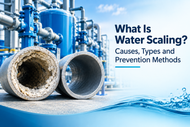
Water scaling is a common challenge in systems that use or circulate water. Mineral deposits can accumulate on pipes, equipment, fixtures, and other surfaces, contributing to hard water scale buildup and affecting normal system operation. If left unaddressed, scale from water can become difficult to remove and may increase cleaning and maintenance requirements.
Understanding what causes scale in water is the first step toward identifying an appropriate response. This post explains how water scaling develops, where it occurs, how to identify a water scaling problem, and the available water scaling solutions.
What Is Water Scaling?
Water scaling is the buildup of mineral deposits on surfaces that come into contact with water. These deposits, known as scale, form from dissolved minerals that become solid and adhere to surfaces. Scale from water may contain calcium carbonate, calcium sulfate, silica, magnesium compounds, or other mineral phases, depending on the water chemistry. Hard water, which contains higher levels of dissolved calcium and magnesium, is commonly associated with water hardness scale, but hardness alone does not mean scale will form. The composition and amount of scale depend on the specific minerals and conditions present in the water.
How Does Scale Form from Water?
Water scaling develops through a sequence of changes in water chemistry and mineral solubility.
- Dissolved Minerals: Water can contain dissolved calcium, magnesium, carbonate, sulfate, silica, and other substances, depending on its source and treatment. These substances remain dissolved as ions while the water conditions allow them to stay in solution.
- Changes in Water Conditions: Heating, evaporation, changes in pH, or increasing mineral concentration can alter mineral solubility and shift the water chemistry. For example, heating water can promote calcium carbonate precipitation by affecting the carbonate equilibrium and reducing the solubility of carbon dioxide.
- Precipitation: When water becomes supersaturated with respect to a particular mineral, dissolved species can form a solid phase. Calcium carbonate and calcium sulfate are examples of minerals that can contribute to scale deposits.
- Deposition and Crystal Growth: The precipitated material can attach to surfaces. Continued deposition and crystal growth can gradually produce a hard mineral layer known as scale.
What Causes Water Scaling?
Several water chemistry and operating conditions can increase the potential for scale formation:
- Water Hardness: Calcium and magnesium are the primary contributors to water hardness and can provide scale-forming ions. Higher concentrations of these ions can increase the potential for mineral deposits, although hardness alone does not determine whether scaling will occur.
- Temperature: Temperature affects the solubility and chemical equilibria of scale-forming minerals. Heating can increase the tendency of some minerals, particularly calcium carbonate, to precipitate. This is why scale formation is commonly observed on heated surfaces and water-heating equipment.
- pH: pH influences the chemical forms and equilibria of dissolved species. For calcium carbonate, changes in pH can alter the balance between dissolved and solid phases and therefore affect scaling potential. The water pH scale measures acidity or alkalinity; it does not measure the amount of scale in water.
- Alkalinity and Carbonate Chemistry: Alkalinity is a measure of water's acid-neutralizing capacity and is commonly influenced by bicarbonate and carbonate ions. In water containing calcium, carbonate chemistry and alkalinity can affect the potential for calcium carbonate scale formation.
- Flow Conditions: Flow affects how dissolved substances are transported through a system and interact with surfaces. Low-flow or stagnant areas can create localized conditions that favor deposition, while higher flow can influence mass transfer and the ability of deposits to remain attached. The effect depends on the system's geometry, water chemistry, and operating conditions.
Hard Water Scale Buildup: Signs and Effects
Water scale can accumulate on surfaces of residential, commercial, and industrial systems, including water pipes, heat exchangers, boilers, water heaters, cooling systems, fixtures and valves, membranes and filtration equipment, etc. Hard water scale buildup can affect water flow, heat transfer, and equipment operation as mineral deposits accumulate. Common signs and effects include:
- Reduced Passageway Diameter: Scale deposits along pipe walls and other flow passages can reduce the available space for water to move through.
- Reduced Heat-Transfer Performance: A layer of scale on heat-transfer surfaces adds thermal resistance, which can reduce heat transfer between the water and the surface.
- Increased Pressure Drop: Deposits that restrict internal flow passages can increase resistance to water movement and contribute to a higher pressure drop across affected components.
- Reduced Water Flow: Significant deposits in pipes, valves, fixtures, or other passages can restrict flow and reduce the amount of water delivered through the system.
- More Cleaning and Maintenance: Accumulated deposits may require more frequent cleaning, descaling, inspection, or component maintenance.
How to Identify a Water Scaling Problem?
Identifying a water scaling problem requires more than observing deposits or reduced system performance. A combination of water testing, equipment inspection, and operating data can help determine whether mineral scaling is contributing to the issue.
- Test Water Hardness: Measure calcium and magnesium concentrations or total hardness to determine the water's scaling potential. Hardness results provide useful context but do not, by themselves, confirm that scaling is occurring.
- Measure pH and Alkalinity: pH and alkalinity measurements help characterize the water chemistry and, particularly for carbonate systems, evaluate conditions that may influence mineral precipitation.
- Check Conductivity or TDS: Conductivity and total dissolved solids (TDS) can provide supporting information about the overall dissolved-ion content of water. These measurements do not identify scale-forming minerals on their own.
- Inspect Equipment and Surfaces: Look for deposits on pipes, valves, heat-transfer surfaces, fixtures, heating elements, and other wetted components. The appearance and location of deposits can provide initial clues.
- Analyze Deposits: Collecting a representative deposit sample for laboratory analysis can help determine its mineral or chemical composition and distinguish scale from other types of fouling.
- Monitor Operating Performance: Changes in pressure drop, flow, heat-transfer performance, or equipment operating conditions can provide evidence of progressive fouling when compared with historical or baseline data.
- Compare Water Chemistry with Operating Conditions: Reviewing source-water chemistry alongside temperature, flow, concentration cycles, treatment conditions, and equipment operating data can help establish whether the conditions are consistent with the observed deposits.
Water Scaling Solutions: How to Prevent Scale Formation
The appropriate water scaling solutions depend on the water chemistry, equipment, operating conditions, and type of scale involved. Common approaches include:
- Water Softening: Ion-exchange softeners reduce calcium and magnesium hardness in water. This can lower the availability of these hardness ions for scale formation, particularly where calcium or magnesium contributes to the deposit.
- Reverse Osmosis and Membrane Treatment: Reverse osmosis can reduce dissolved salts and minerals from a water stream. Other membrane processes may provide different levels of dissolved-solids removal, so treatment selection should account for feed-water chemistry, membrane characteristics, recovery, and operating conditions.
- Chemical Scale Control: Scale inhibitors can interfere with mineral precipitation, crystal growth, or deposition. Their performance depends on the inhibitor chemistry, target mineral, water chemistry, and application conditions.
- pH and Alkalinity Management: Adjusting pH or alkalinity can influence the scaling tendency of certain minerals. This approach is application-specific and should be based on the water chemistry and operating requirements of the system.
- Blowdown and Concentration Control: In boilers and evaporative cooling systems, water losses through evaporation or steam generation can concentrate dissolved substances in the remaining water. Controlled blowdown removes a portion of the concentrated water and replaces it with makeup water, helping maintain the desired water chemistry.
- Ongoing Monitoring and Maintenance: Regular monitoring of relevant water chemistry and operating parameters can help maintain treatment conditions within the desired range. Scheduled inspection, cleaning, and maintenance can also address deposits before they interfere with equipment operation.
How to Remove Existing Water Scale?
Preventing new deposits and removing water scale require different approaches. Existing deposits may be removed through mechanical cleaning, chemical descaling, or equipment-specific cleaning procedures. The appropriate method depends on the deposit composition, thickness, equipment materials, and manufacturer's requirements. Cleaning chemicals should be compatible with the equipment and selected according to the type of deposit being removed.
Get Support for Your Water Scaling Problem
Cannon Water Technology provides water treatment products and equipment for applications where controlling mineral deposits and maintaining water quality are part of system operation. Our offerings include cooling tower treatment chemicals, boiler water treatment chemicals, chemical feed equipment, and water testing and monitoring products.
We support water treatment requirements across cooling systems, boilers, process water, and other commercial and industrial applications. Product selection depends on the water chemistry, equipment, operating conditions, and treatment requirements of each application.
Contact us to discuss your water scaling problem and find suitable treatment products or equipment for your system.