
Why Filter Gravel Is Essential for Multi-Media Water Filtration Systems?
Posted by David Cannon on 2nd Sep 2026

In many sand and gravel water filtration systems, attention is often focused on filtration media such as anthracite, sand, and garnet, while the supporting gravel layer is an equally important part of the filter design. Filter gravel is a critical structural element that supports the media bed, helps distribute water evenly, protects the underdrain system, and helps maintain consistent filter performance during both normal filtration and backwashing.
Without properly specified and installed grav
How Liquid Solid Separators Improve Industrial Water Quality and Reduce Operating Costs?
Posted by David Cannon on 28th Aug 2026
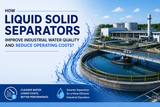
Properly selected separation equipment separates solids from liquids and can help facilities improve water quality, protect downstream equipment, and make better use of available water resources. If these solids are not effectively removed, they can contribute to fouling, clogging, maintenance requirements, and inconsistent treatment performance.
An effective liquid-solid separation process helps address these challenges by removing unwanted particulate matter from industrial water before it rea
Biopolymers in Water Treatment: How They Support Cleaner and Greener Operations?
Posted by David Cannon on 25th Aug 2026

For decades, synthetic polymers and chemical additives have played a central role in water and wastewater treatment. They remain effective in many applications; however, concerns about biodegradability, chemical residues, disposal requirements, and environmental impact continue to grow.
This shift has increased interest in biopolymers in water treatment. Derived from renewable biological sources, biopolymers offer an alternative approach that supports contaminant removal, solid-liquid separation
How to Monitor Water Quality in Containerised Treatment Systems?
Posted by David Cannon on 24th Aug 2026
Containerised treatment systems are prefabricated, modular water treatment units installed inside standard shipping containers or purpose-built enclosures. These systems integrate treatment equipment, pumps, filtration units, chemical dosing equipment, instrumentation, controls, and piping into a compact, transportable package. In industrial applications, they can be deployed for process water treatment, industrial wastewater treatment, water reuse, pretreatment, and emergency or temporary treat