
What Is Water Scaling? Causes, Types and Prevention Methods
Posted by David Cannon on 7th Oct 2026

Water scaling is a common challenge in systems that use or circulate water. Mineral deposits can accumulate on pipes, equipment, fixtures, and other surfaces, contributing to hard water scale buildup and affecting normal system operation. If left unaddressed, scale from water can become difficult to remove and may increase cleaning and maintenance requirements.
Understanding what causes scale in water is the first step toward identifying an appropriate response. This post explains how water scal
Turbidity Measurement in Water: How It Works, Testing Methods, and Meters
Posted by David Cannon on 5th Oct 2026

Turbidity refers to the cloudiness or haziness of water caused by suspended and colloidal particles that scatter light passing through a water sample. The amount, size, shape, and optical characteristics of these particles influence the measured turbidity, making it a useful indicator of changes in water clarity and treatment performance.
During industrial and municipal water treatment, turbidity measurement in water can provide insight into the effectiveness of processes such as clarification,
Water Conductivity Measurement: A Complete Guide
Posted by David Cannon on 30th Sep 2026

Water conductivity refers to the ability of water to conduct an electrical current, which is primarily influenced by the dissolved ions present in the water. As the concentration and type of these ions change, conductivity can also change, making it a useful indicator of variations in water chemistry. In industrial water treatment, conductivity can provide insight into changes in water quality and treatment performance. It can also help facilities determine whether water is suitable for a specif
What Is Turbidity in Water? Causes, Measurement & Treatment Methods
Posted by David Cannon on 29th Sep 2026
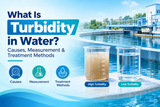
Water quality is influenced by many factors, and the presence of suspended particles is one of them. These particles can make the water turbid, which means it appears cloudy or slightly opaque due to the scattered particles of various types depending on the source. While visual observation can indicate that a change has occurred, it cannot provide a precise measure of turbidity.
For this reason, water turbidity measurement unit is an important part of monitoring water quality across drinking wat