
Free Chlorine vs Total Chlorine: Understanding the Difference
Posted by David Cannon on 16th Oct 2026
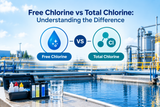
Chlorine is widely used in water treatment to control microbial growth and maintain water quality across municipal, commercial, and industrial applications. However, monitoring chlorine levels requires understanding the different measurements used to evaluate disinfectant residuals. The terms free chlorine and total chlorine are often used together; however, they do not represent the same measurement.
Understanding free chlorine vs total chlorine helps professionals assess disinfectant availabil
Scale vs Corrosion in Water Systems: Causes and Differences
Posted by David Cannon on 15th Oct 2026
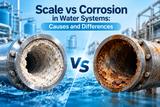
Scale and corrosion are two common problems in water systems, but they affect equipment in different ways. Scale deposits can restrict heat transfer, reduce flow through pipes, and impair equipment efficiency. Corrosion gradually degrades metal surfaces, potentially causing leaks, equipment damage, and water contamination. When both occur in the same system, diagnosing the underlying causes becomes more complicated.
Understanding the scaling and corrosion difference helps facility operators ide
Legionella in Water Systems: Causes, Risk Factors and Prevention
Posted by David Cannon on 14th Oct 2026
Water systems in commercial and industrial facilities can become a source of Legionella exposure when conditions allow the bacteria to grow and spread. Legionella is a waterborne bacterium that can cause serious illness in humans. The bacteria can multiply in building plumbing, hot water systems, cooling towers, and other water-based equipment, particularly when water stagnates, temperatures favor growth, or disinfection is inadequate. People can become infected by inhaling contaminated water dr
What Is Biofilm in Water Systems? Causes, Risks and Control Methods
Posted by David Cannon on 12th Oct 2026
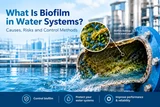
Biofilm can become a persistent problem in water systems when microbial growth accumulates on equipment, membranes, and other wetted surfaces. In systems with biofilm in water pipes or biofilm in water lines, microbial deposits can contribute to water quality concerns, biological fouling, flow restrictions, and conditions that may promote corrosion or interfere with equipment performance.
Established biofilm can also be difficult to control because microorganisms within the biofilm matrix may be